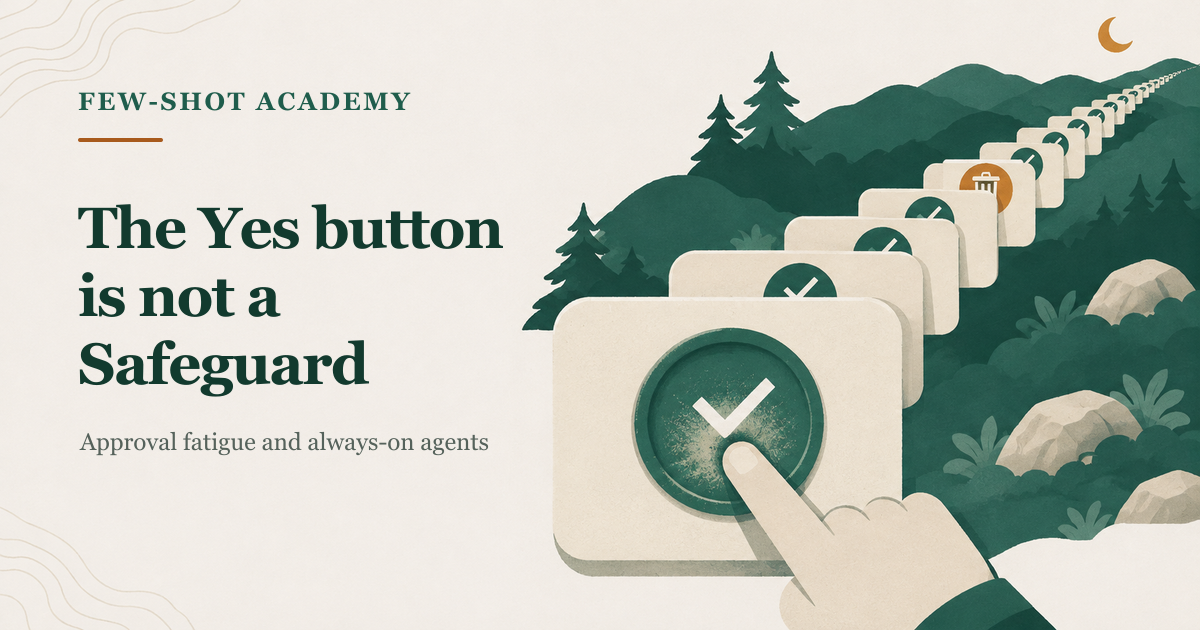
The Yes button is not a Safeguard

Most of my approval prompts come from coding agents like Codex and Claude Code: reading git, reading a file, opening a web page. They are annoying, so over time I added a few things to the approved list, such as viewing a pull request on GitHub, or running npm run build and npm start in an established project. But I still want agents to ask for permission, because of a bad experience in August 2025. Cursor, an IDE I used back then, deleted my whole drive in auto-run mode. Luckily I had a backup and was able to restore it quickly. Without that backup, it could have been a huge debacle.
Because of that incident, I see only a few prompts now, and I read them with attention. But I know the habit. I am sure I have approved something without really reading it, even if I do not remember exactly what. Clicking yes starts to become second nature, like clicking next, next, next on an installer.
My own agents are all set up to work with me, and I trigger them for a specific task. Other than my coding tools, I do not leave agents running on their own. I have not used any of the new always-on agents below either. I am still not confident enough in them to hand over the keys to the kingdom.
Between September 8 and October 21, Meta launched Muse, OpenAI announced dots, and Anthropic opened a research preview of Claude Duet. All three are agents that keep working while you are away, and all three rely on the same safety idea: before anything that matters, the agent asks you first.
Anthropic's safety page for Duet has one line that stayed with me: "Approval fatigue is a serious issue, because too many requests teach people to tap through them."